


Page 86 - Сигурност и отбрана - брой 2 - 2024
P. 86
Сигурност и отбрана, брой 2, 2024 г.                             Научно списание


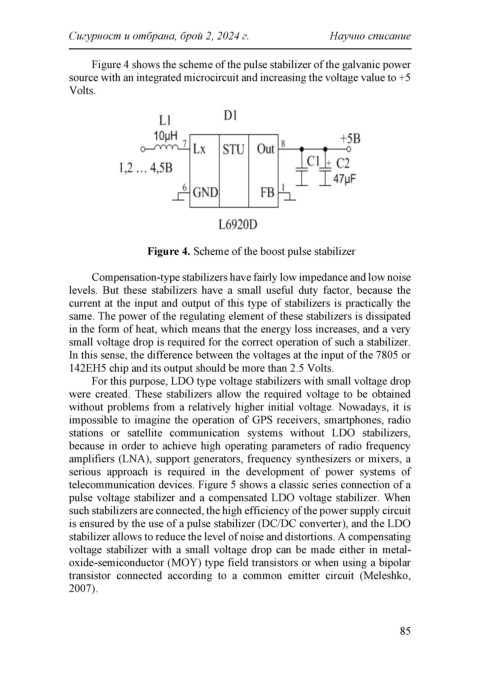
                        Figure 4 shows the scheme of the pulse stabilizer of the galvanic power
                  source with an integrated microcircuit and increasing the voltage value to +5
                  Volts.


                                     Figure 4. Scheme of the boost pulse stabilizer

                        Compensation-type stabilizers have fairly low impedance and low noise
                  levels.  But  these  stabilizers  have  a  small  useful  duty  factor,  because  the
                  current at the input and output of this type of stabilizers is practically the
                  same. The power of the regulating element of these stabilizers is dissipated
                  in the form of heat, which means that the energy loss increases, and a very
                  small voltage drop is required for the correct operation of such a stabilizer.
                  In this sense, the difference between the voltages at the input of the 7805 or
                  142ЕН5 chip and its output should be more than 2.5 Volts.
                        For this purpose, LDO type voltage stabilizers with small voltage drop
                  were created. These stabilizers allow the required voltage to be obtained
                  without problems from a relatively higher initial voltage. Nowadays, it is
                  impossible to imagine the operation of GPS receivers, smartphones, radio
                  stations  or  satellite  communication  systems  without  LDO  stabilizers,
                  because in order to achieve high operating parameters of radio frequency
                  amplifiers (LNA), support generators, frequency synthesizers or mixers, a
                  serious  approach  is  required  in  the  development  of  power  systems  of
                  telecommunication devices. Figure 5 shows a classic series connection of a
                  pulse voltage stabilizer and a compensated LDO voltage stabilizer. When
                  such stabilizers are connected, the high efficiency of the power supply circuit
                  is ensured by the use of a pulse stabilizer (DC/DC converter), and the LDO
                  stabilizer allows to reduce the level of noise and distortions. A compensating
                  voltage stabilizer with a small voltage drop can be made either in metal-
                  oxide-semiconductor (MOY) type field transistors or when using a bipolar
                  transistor  connected  according  to  a  common  emitter  circuit  (Meleshko,
                  2007).


                                                                                                    85

